Showing people the health insurance their employer bought them
Corporate health cover belongs to the employer, not the employee, so it never showed up in anyone's personal account. I built the missing link: your card, your remaining limit and every visit you've claimed, sitting alongside the rest of your policies.
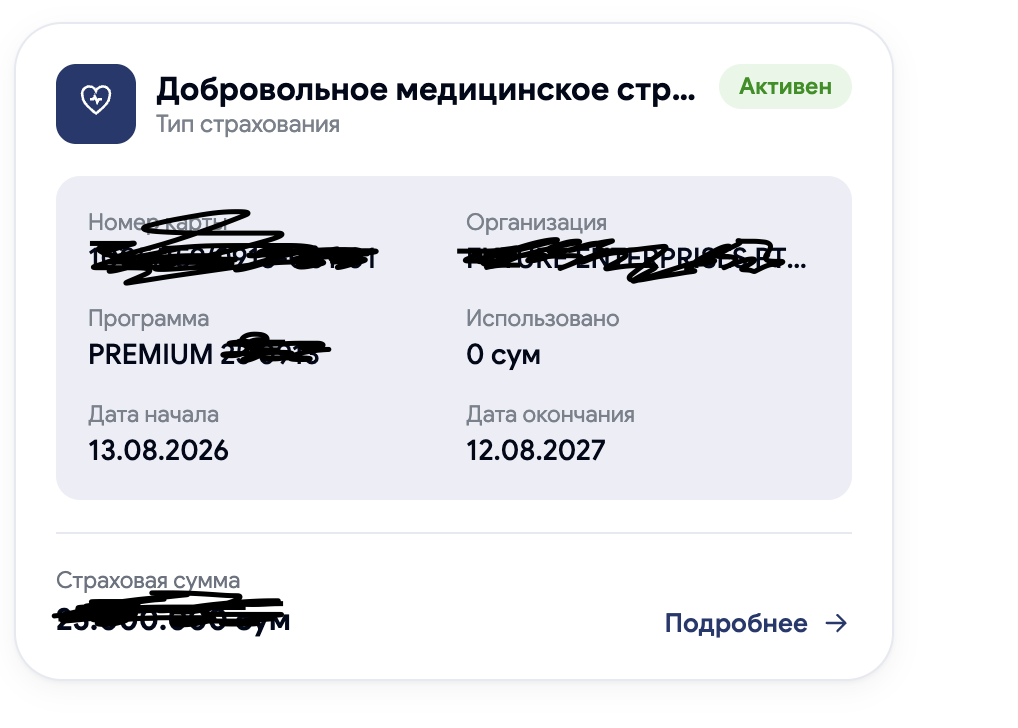
Most people covered by a company health plan carry a card and know almost nothing about it — what it covers, how much is left, what they've already used. To find out, they call HR or the insurer and wait.
I wanted that answer to be one tap away, inside the account they already log into.
The problem: a policy that isn't yours
Normal insurance is simple to show. You bought it, the contract carries your name, and the national registry hands it back when we ask about you.
Company health cover works differently. The employer signs one contract and the staff are members on it — so when the site asked "what policies belong to this person?", the honest answer was "none". The information existed, but in a completely different system: the one the medical claims team uses day to day.
How it works
Four steps, every time someone opens their policies:
- Who are you? The identity comes from the signed-in person's own verified profile — their national ID number first, passport only as a fallback, because a passport can be reissued and an ID number never changes.
- Are you on a company plan? We ask the medical system whether that person is a member.
- What is your plan worth? A second lookup brings back the total cover, what's been spent, what's still being processed, what treatments are included, and every past visit.
- Show it as a policy. It appears as a normal card in the list, plus its own page with a balance bar, the cover list and the visit history.
The parts that were harder than they look
- Whose data is this? The system I query will return anyone's name, employer and medical history for a bare ID number. So that number never comes from the browser — only from the logged-in person's own verified profile. That rule went in on the first line of code, not later.
- Money that double-counts. Each treatment type has its own cap, and those caps sit inside the overall cover. Adding them up looks correct and is completely wrong — it would show people twice the cover they actually have. Only the plan's own totals are used.
- Zero doesn't mean worthless. Some treatments are covered with no cap at all, and arrive as a limit of zero. Printed literally, "0 sum" reads as "not covered". Those became a separate "included" list instead.
- When you leave the job. Cover ends with the employment, so the card turns inactive with the closing date shown — but the history stays readable, because people still need it.
Why I'm proud of it
It fails softly. If the service holding the limits is unavailable, the card still appears with everything else we know, and one slow system can never hang the page.
And the best compliment it can get is no compliment at all: it looks and behaves like every other policy in the account. Nobody using it needs to know it came from somewhere else entirely — which was the whole point.